27 July 2014
Goodies
27/07/14 16:12
Over the last month we acquired a number of items that we're very happy with. After I left for home Marsha went to a couple of fossil and rock shops in Minneapolis. She totally surprised me with them. In hindsight it's probably a good thing I wasn't there with her. Either I would have totally chumped out and insisted we couldn't spend money on me, ignoring the fact Marsha has become a big fan of trilobites and other fossils too. The other possibility is that I would have gone gonzo and bought one of everything in the store, which also would not have been good.
First is this addition to our fossil collection. At first glance it appears to be a nondescript chunk of red rock. Actually that's exactly what it is. At first glance I even mistook it for a piece of red lava. It is what KIND of red rock it is though that makes it special. Its origin makes it interesting.
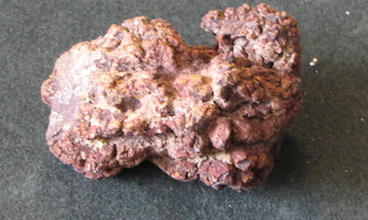
This is known as a coprolite. A coprolite is fossil dung. This is actually a two inch long by three quarter inch thick piece of six million year old reptile droppings. OK not the most impressive thing for most people but I'm not most people. Imagine how big the lizard must have been, or alligator, or possibly snake. I'm glad I wasn't around to meet the creature that left this behind, and I'm equally glad I didn't meet the droppings before they were fossilized.
Next on the list is this beautiful piece.
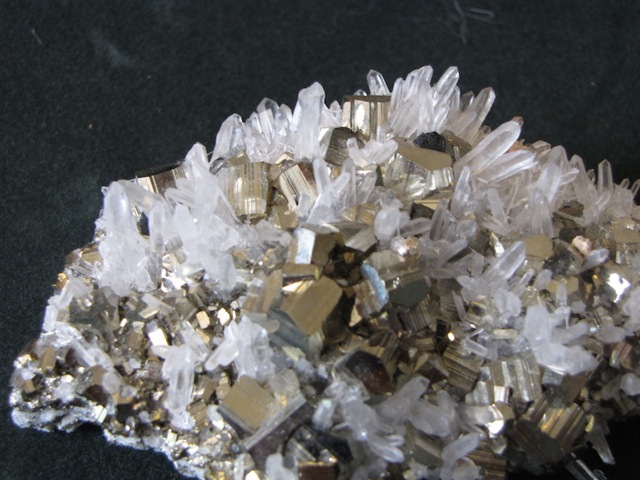
This specimen is a mass of tiny quartz crystals studded with beautiful pyrites as big as my fist. The picture doesn't do it justice at all. It's a stunningly beautiful sample that glitters with every shift of the light or slight movement of the hand. It's just gorgeous. Right now it's on our mantle where all can see.
Few people have ever heard of Crinoids. They actually still exist and despite the seaweed look they are in fact ancient animals related to starfish. They live on the sea bottom so most people don't pay much attention to them. Four or five hundred million years ago they formed huge meadows across the sea floor. Others, such as this specimen floated along the surface. The bottom dwellers are much more commonly found, I have a large slab filled with them. The floaters are much rarer, and even rarer is to find one intact. Usually they were eaten by something or they'd get smashed to pieces against the shore.
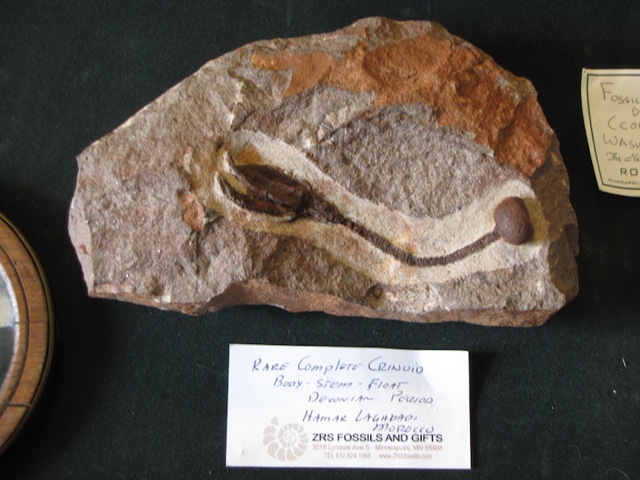
This example is a beautiful tiny floating crinoid. At the left end of the six inch log specimen are the tentacles armed with fine branches to catch plankton out of the sea water and then maneuver them to the mouth in the centre of the "head". At the right end is the float, a gas filled bubble that kept the animal above the bottom. What circumstances lead to the nearly pristine preservation of this animal will never be known, but it was and for that I'm just ecstatic. Imagine the staggeringly remote odds of this example ending up in my hands. Out of all crinoids, only a few were floaters. Out of those rare species one in a million might make it to the sea bed intact. Out of that one in a million might be preserved and not obliterated by worms and bacteria looking for a meal. Out of that, one in a million would be dug up and not blasted during quarrying or weathered out and destroyed or the rocks folded and crushed till there was no sign left. Then out of the minuscule number remaining that actually make it to the hands of the palaeontology community, this one happened to travel from Morocco to a store in Minneapolis just on the day when Marsha walked in and saw it. That is why I think of fossils as treasures.
Yes, even coprolites.
While in Minnesota Marsha also picked up this beauty.
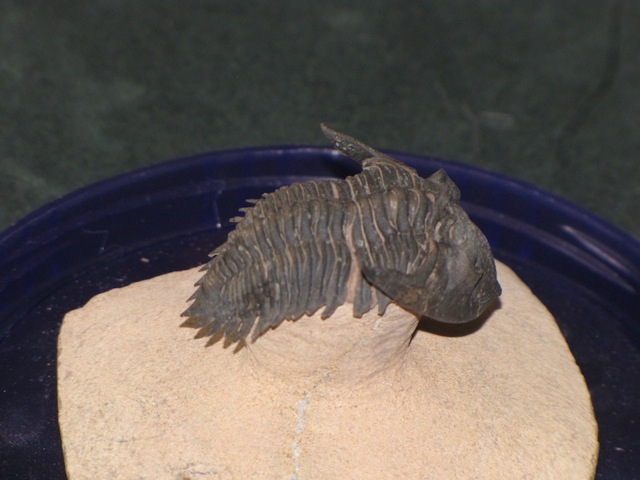
It's a meticulously prepared trilobite. It turns out that she is as big a fan of these little bugs as I am. I haven't had a chance to figure out what the species is but in all likelihood it is in the four hundred to five hundred million year old range.
Lastly is something that we did not pick up in Minnesota. This all started a couple of years ago on our twenty-fifth anniversary. Barbara made us a cute card to celebrate the event.
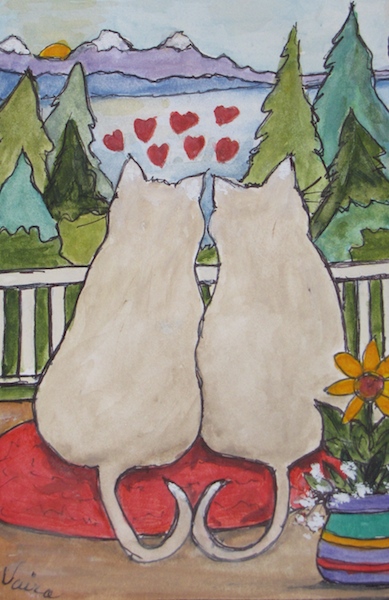
It is the view off of our deck and the two cats are us. The second we saw it we knew we wanted to do something special with the image. Barbara does a lot of these little watercolour cards and they are beautiful. This one was special though. We however didn't want to rush into it. We took out time and decided what we wanted to do. Then after the last couple of years of health problems, remodelling, and other issues we decided the time was right to do this.
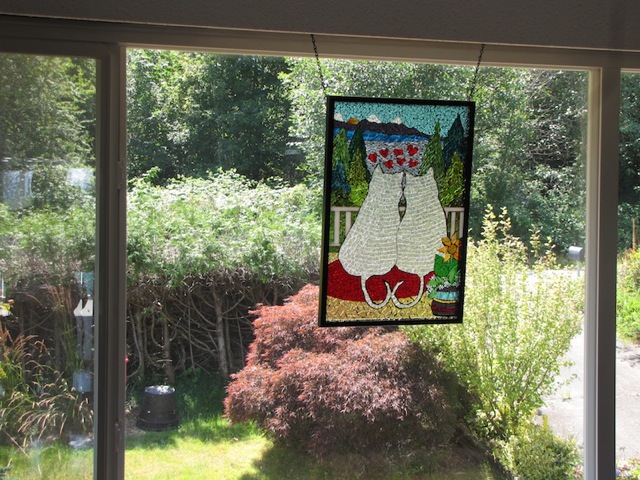
We had the card redone in stained glass. It's hanging in our front window where it will catch the light most of the day. Here's a close up view.
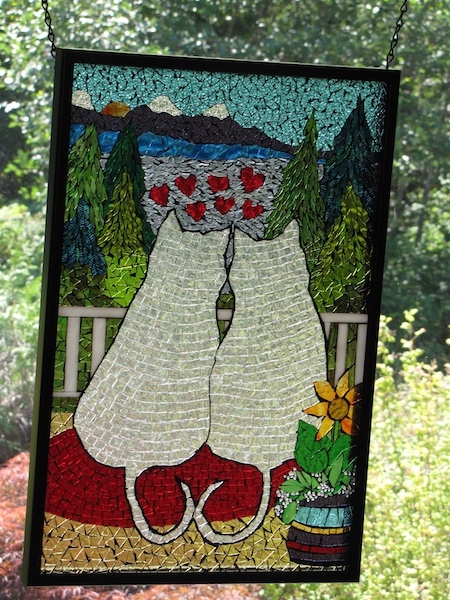
For those of you sticklers, technically it is not stained glass. It is a glass mosaic. This is why we waited so long to have it made. We wanted to find the perfect artist and style to do justice to Barb's painting. Stained glass is was what we were thinking of at first but the lead between the glass takes up a lot of space. This mosaic technique eliminates the lead. Instead the artist, Cherie Dobbie out of Campbell River BC, cuts shards of glass and glues them to a piece of tempered plate glass. Then the spaces are filled with opaque grout. In addition instead of simple coloured flat glass, she uses textured glass which catches the light even better. It's why the hearts have texture and the white in the cats is not clear and the flower pot has little clusters of white flowers. The result will brighten our living room for years to come.
First is this addition to our fossil collection. At first glance it appears to be a nondescript chunk of red rock. Actually that's exactly what it is. At first glance I even mistook it for a piece of red lava. It is what KIND of red rock it is though that makes it special. Its origin makes it interesting.
This is known as a coprolite. A coprolite is fossil dung. This is actually a two inch long by three quarter inch thick piece of six million year old reptile droppings. OK not the most impressive thing for most people but I'm not most people. Imagine how big the lizard must have been, or alligator, or possibly snake. I'm glad I wasn't around to meet the creature that left this behind, and I'm equally glad I didn't meet the droppings before they were fossilized.
Next on the list is this beautiful piece.
This specimen is a mass of tiny quartz crystals studded with beautiful pyrites as big as my fist. The picture doesn't do it justice at all. It's a stunningly beautiful sample that glitters with every shift of the light or slight movement of the hand. It's just gorgeous. Right now it's on our mantle where all can see.
Few people have ever heard of Crinoids. They actually still exist and despite the seaweed look they are in fact ancient animals related to starfish. They live on the sea bottom so most people don't pay much attention to them. Four or five hundred million years ago they formed huge meadows across the sea floor. Others, such as this specimen floated along the surface. The bottom dwellers are much more commonly found, I have a large slab filled with them. The floaters are much rarer, and even rarer is to find one intact. Usually they were eaten by something or they'd get smashed to pieces against the shore.
This example is a beautiful tiny floating crinoid. At the left end of the six inch log specimen are the tentacles armed with fine branches to catch plankton out of the sea water and then maneuver them to the mouth in the centre of the "head". At the right end is the float, a gas filled bubble that kept the animal above the bottom. What circumstances lead to the nearly pristine preservation of this animal will never be known, but it was and for that I'm just ecstatic. Imagine the staggeringly remote odds of this example ending up in my hands. Out of all crinoids, only a few were floaters. Out of those rare species one in a million might make it to the sea bed intact. Out of that one in a million might be preserved and not obliterated by worms and bacteria looking for a meal. Out of that, one in a million would be dug up and not blasted during quarrying or weathered out and destroyed or the rocks folded and crushed till there was no sign left. Then out of the minuscule number remaining that actually make it to the hands of the palaeontology community, this one happened to travel from Morocco to a store in Minneapolis just on the day when Marsha walked in and saw it. That is why I think of fossils as treasures.
Yes, even coprolites.
While in Minnesota Marsha also picked up this beauty.
It's a meticulously prepared trilobite. It turns out that she is as big a fan of these little bugs as I am. I haven't had a chance to figure out what the species is but in all likelihood it is in the four hundred to five hundred million year old range.
Lastly is something that we did not pick up in Minnesota. This all started a couple of years ago on our twenty-fifth anniversary. Barbara made us a cute card to celebrate the event.
It is the view off of our deck and the two cats are us. The second we saw it we knew we wanted to do something special with the image. Barbara does a lot of these little watercolour cards and they are beautiful. This one was special though. We however didn't want to rush into it. We took out time and decided what we wanted to do. Then after the last couple of years of health problems, remodelling, and other issues we decided the time was right to do this.
We had the card redone in stained glass. It's hanging in our front window where it will catch the light most of the day. Here's a close up view.
For those of you sticklers, technically it is not stained glass. It is a glass mosaic. This is why we waited so long to have it made. We wanted to find the perfect artist and style to do justice to Barb's painting. Stained glass is was what we were thinking of at first but the lead between the glass takes up a lot of space. This mosaic technique eliminates the lead. Instead the artist, Cherie Dobbie out of Campbell River BC, cuts shards of glass and glues them to a piece of tempered plate glass. Then the spaces are filled with opaque grout. In addition instead of simple coloured flat glass, she uses textured glass which catches the light even better. It's why the hearts have texture and the white in the cats is not clear and the flower pot has little clusters of white flowers. The result will brighten our living room for years to come.