09 August 2009
Big Trip Part 2b
09/08/09 17:42
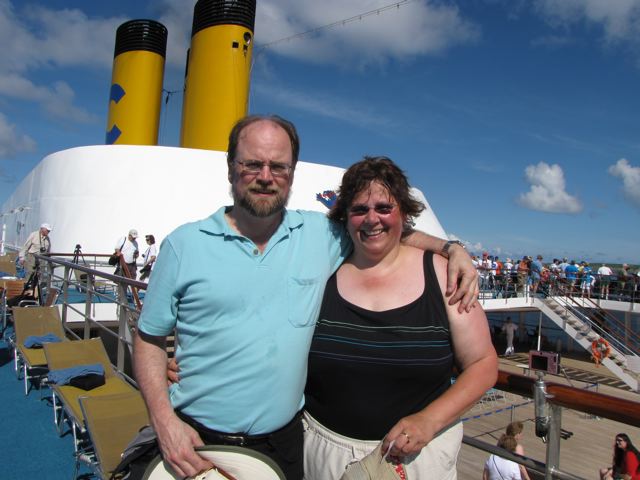
We had several hours before the eclipse to wait around so here we are at our spot . Don't worry we wore our hats for everything but this picture and covered ourselves with sunscreen once an hour.
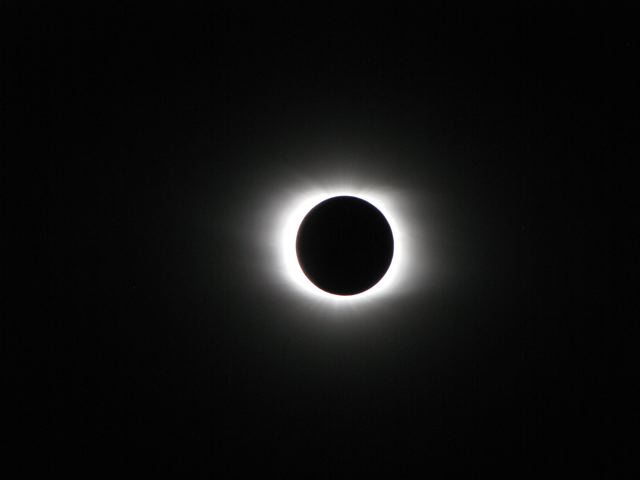
Totality!
It lasted 6 minutes and 42.3 seconds. Officially it was 6:38 but the people that put together the eclipse used a couple of tricks to lengthen it. First they sailed the ship along the path of the eclipse "chasing the shadow" as it were. Also the moon isn't quite round. By placing the ship a few miles north of centerline they were lined up with the widest part of the moon. All of this added over 4 seconds to our experience.
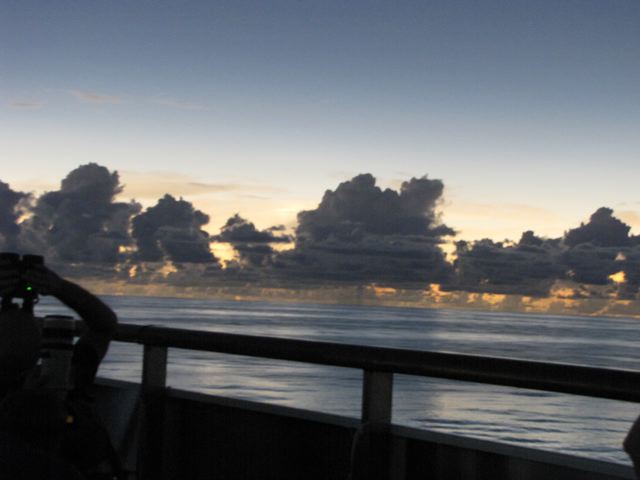
This eclipse was over twice as long as any of the other eclipses we had seen. This gave us time to take pictures and then when they announced "Mid Eclipse" to put down the cameras and just enjoy the sight. In addition to the disk of the sun overhead, the clouds around the edge of the clearing were amazing. The closest ones were in the shadow and were dark. Behind them were the ones in deep twilight that were orange, pink, and red. Occasionally we could see the farthest away clouds, brilliant white in full sunlight. Unfortunately the clouds were exceedingly hard to photograph. This is the best one of our shots. We also could see planets and stars. Some people had worn an eye patch in order to dark adapt one of their eyes. We didn't but those that had said they could see the whole of Orion and parts of several other constellations.
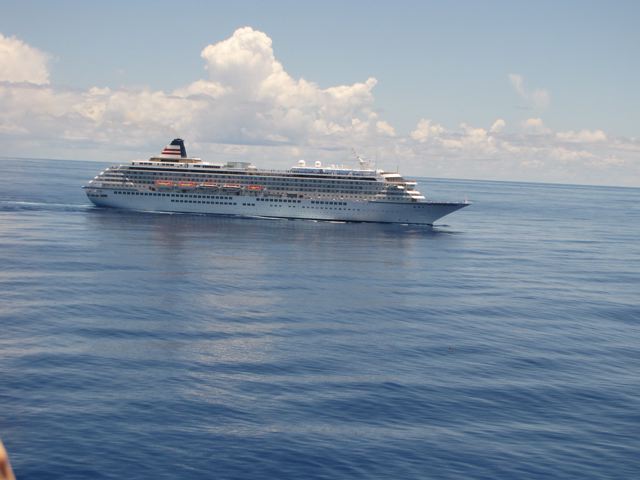
Then the eclipse was over. A couple short range Japanese cruse liners had come out to see the spectacle and had ended up near us.
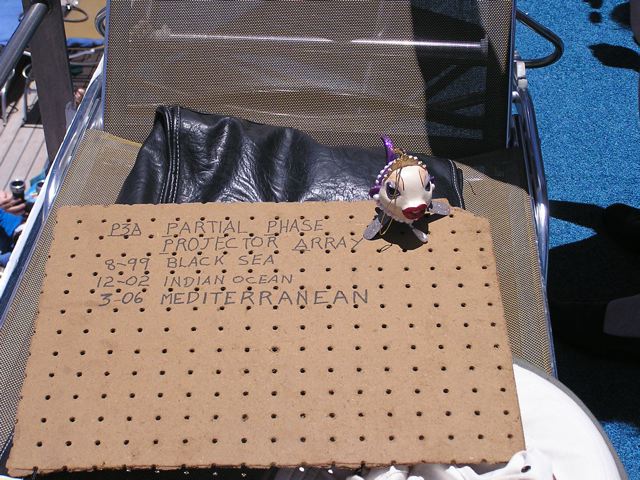
We had brought along our Partial Phase Projector Array to safely view the partial phases leading up to and following totality. This makes the fourth eclipse we've taken this device to.
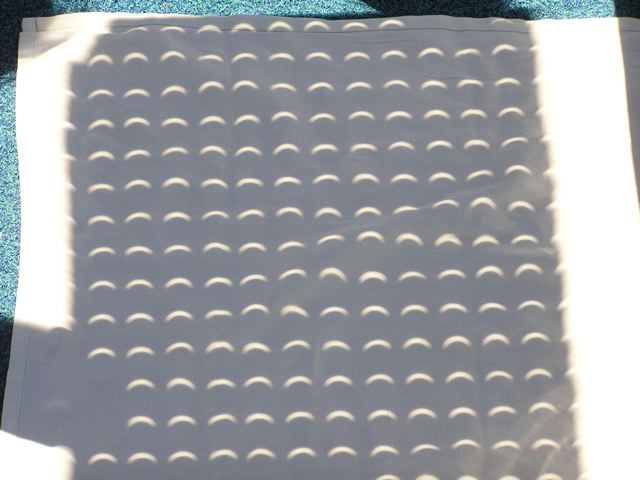
The partial Phase Projector Array (P3A) and Shi-Shi (the proxy for our friend Sheila that wanted to come on the trip but was unable to). Notice the exceptionally clear shadows. This is what you see just before and after Totality. The light gets really weird and shadows get very sharp. Single hairs will cast sharp shadows on the deck. It's quite creepy.
After the eclipse we turned and sailed for Japan. By the next morning we were in 4 meter seas, wind and rain. We were exceedingly lucky. We learned that most other spots, Tokoretto, Shanghai, and inland had weather problems and many missed the whole thing.
Totality!
It lasted 6 minutes and 42.3 seconds. Officially it was 6:38 but the people that put together the eclipse used a couple of tricks to lengthen it. First they sailed the ship along the path of the eclipse "chasing the shadow" as it were. Also the moon isn't quite round. By placing the ship a few miles north of centerline they were lined up with the widest part of the moon. All of this added over 4 seconds to our experience.
This eclipse was over twice as long as any of the other eclipses we had seen. This gave us time to take pictures and then when they announced "Mid Eclipse" to put down the cameras and just enjoy the sight. In addition to the disk of the sun overhead, the clouds around the edge of the clearing were amazing. The closest ones were in the shadow and were dark. Behind them were the ones in deep twilight that were orange, pink, and red. Occasionally we could see the farthest away clouds, brilliant white in full sunlight. Unfortunately the clouds were exceedingly hard to photograph. This is the best one of our shots. We also could see planets and stars. Some people had worn an eye patch in order to dark adapt one of their eyes. We didn't but those that had said they could see the whole of Orion and parts of several other constellations.
Then the eclipse was over. A couple short range Japanese cruse liners had come out to see the spectacle and had ended up near us.
We had brought along our Partial Phase Projector Array to safely view the partial phases leading up to and following totality. This makes the fourth eclipse we've taken this device to.
The partial Phase Projector Array (P3A) and Shi-Shi (the proxy for our friend Sheila that wanted to come on the trip but was unable to). Notice the exceptionally clear shadows. This is what you see just before and after Totality. The light gets really weird and shadows get very sharp. Single hairs will cast sharp shadows on the deck. It's quite creepy.
After the eclipse we turned and sailed for Japan. By the next morning we were in 4 meter seas, wind and rain. We were exceedingly lucky. We learned that most other spots, Tokoretto, Shanghai, and inland had weather problems and many missed the whole thing.
Big Trip Part 2a
09/08/09 17:40
After we left Kagoshima we sailed for a day through 4 meter seas, rain, and wind. Of course it was also over 30C outside so we didn't go on deck much. We went to several lectures and read. The mood onboard wasn't optimistic. It looked like we might very well get rained out on Eclipse Day.
Eclipse day dawned calm and mostly clear. It was amazing. A few puffy cumulous clouds dotted the sky but these were far enough apart that we would be able to dodge them with no trouble. We steamed on for our rendezvous in mid ocean and plans to throw the meteorologist overboard were scrapped.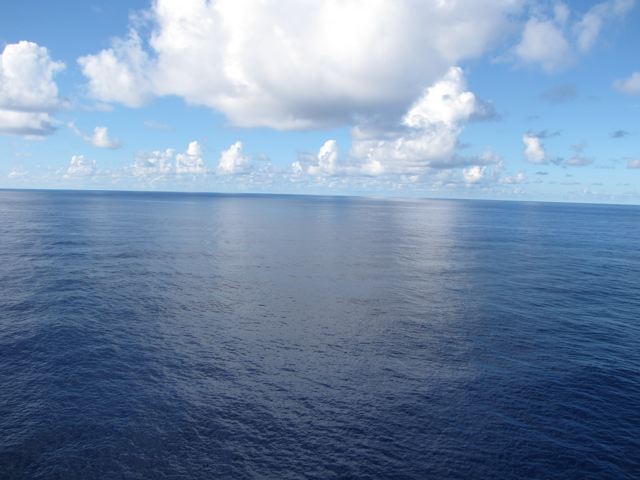
Before we went to the spot where we would view the eclipse the ship circled around the island of Iwo Jima, made famous in two films by Clint Eastwood and one by John Wayne. Oh and there was some kind of a battle there during WWII.
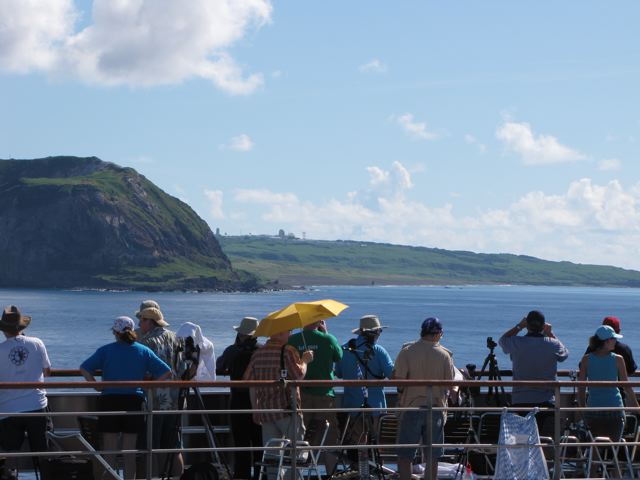
All kidding aside it was a very quiet and sober period as we sailed past the island. We could see Mount Suribachi, and the beaches where soldiers stormed ashore in 1945. Above all it was amazing how tiny the place was. We were only about kilometer away. We could see waves washing on the shore, and the peak where the flag was raised. A couple of the lectures we had attended were on Iwo Jima and its history. In one of the lectures there was a picture of a US battleship sailing by the island no further than we were firing all their guns essentially at point blank range.
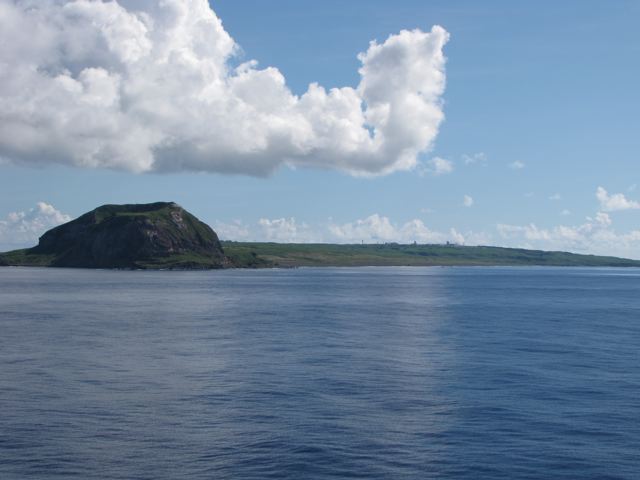
This is Mount Suribachi,where the flag was raised. . The peak wasn't the main stronghold though. The other end of the island was a maize of tunnels and strongholds protected from bombs and shells beneath and within the lava flows that make up the island. It took several more weeks to secure the whole place.
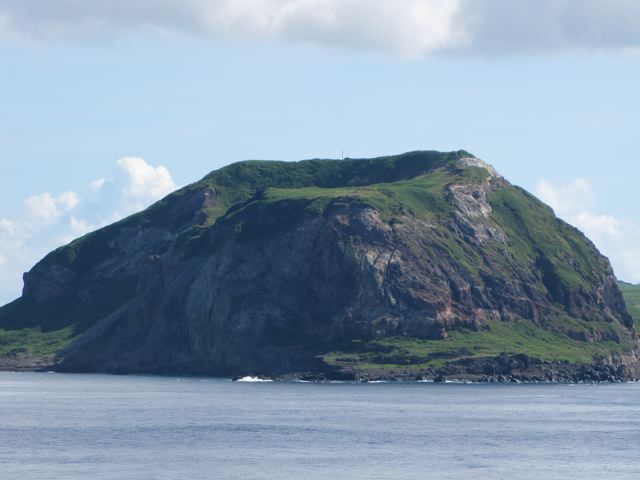
These are the beaches where the soldiers came ashore. Note the airfield in the middle of the island. During WWII there was an airfield on the island as well. It had a radar station that the Japanese used to warn the mainland of incoming bomber raids. The US tried to knock the radar out several times but the Japanese forces always had it running again within a day. That was when the decision was made to take the island to solve the problem.
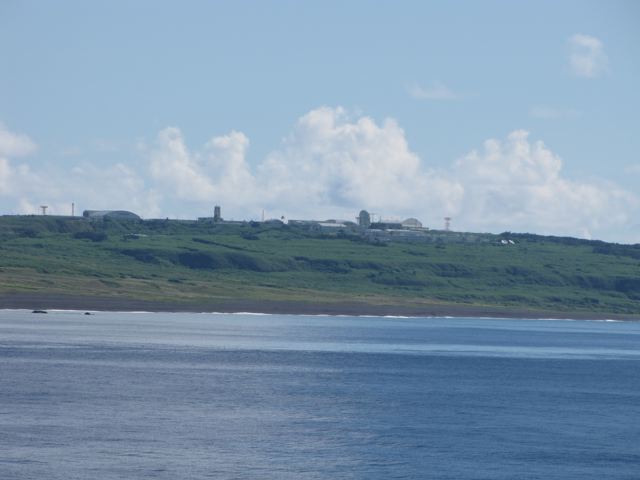
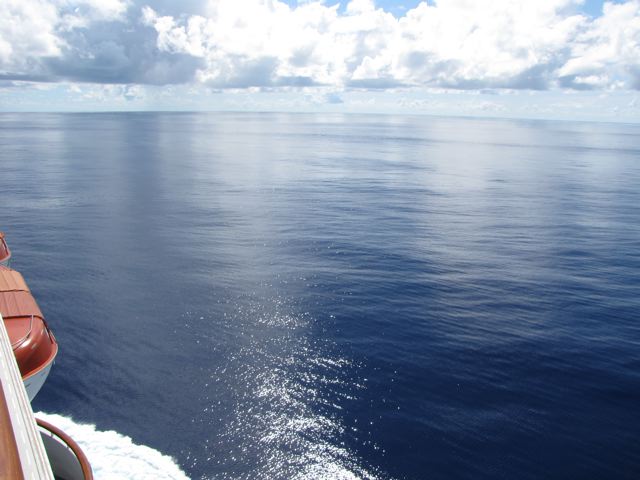
After leaving Iwo Jima we sailed north to our rendezvous with the sun. If anything it became clearer and calmer, and hotter. There was a moment of panic when one of the cumulous clouds we passed under dropped a few raindrops. aside from a bit of scrambling to cover cameras and lenses, there was no damage. Marsha and I didn't mind the cooling rain either. It was soon over however and we sailed into a huge clear spot.
All sorts of people follow eclipses. In many ways it's like the people that used to follow the band The Grateful Dead. This guy was a longtime Eclipse Chaser. His son (not pictured) looked exactly the same but with a full head of white hair.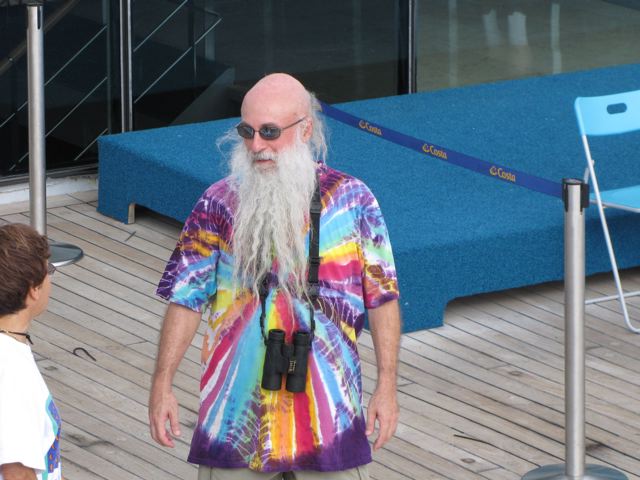
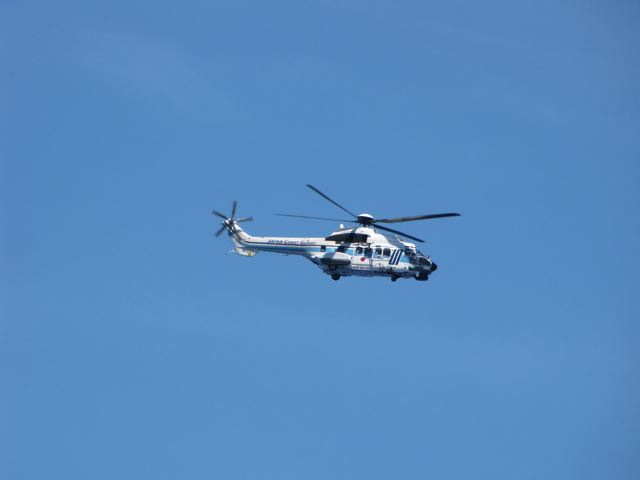
About a half hour before totality a Japanese Coast Guard helicopter circled the ship. Our first thought was that we were a heck of a long way from Japan. I was surprised the he had enough fuel to make it out and back. Our second thought was to wonder why he came out here to circle us once and then head home. Our third thought was that if he'd timed his trip better he would have seen totality.
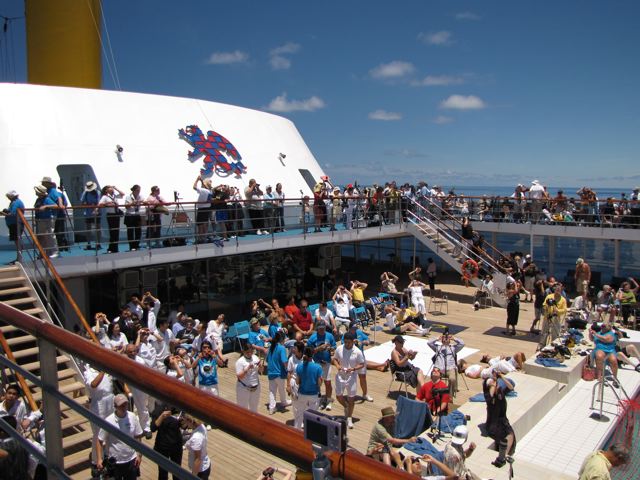
This is what the deck looked like one to two minutes before totality. The light gets really weird, shadows get really sharp, the sky turns a deep color and you can see the shadow coming at you at something like 1000 miles per hour.
Another email will follow this on to continue the story.
M&D
Eclipse day dawned calm and mostly clear. It was amazing. A few puffy cumulous clouds dotted the sky but these were far enough apart that we would be able to dodge them with no trouble. We steamed on for our rendezvous in mid ocean and plans to throw the meteorologist overboard were scrapped.
Before we went to the spot where we would view the eclipse the ship circled around the island of Iwo Jima, made famous in two films by Clint Eastwood and one by John Wayne. Oh and there was some kind of a battle there during WWII.
All kidding aside it was a very quiet and sober period as we sailed past the island. We could see Mount Suribachi, and the beaches where soldiers stormed ashore in 1945. Above all it was amazing how tiny the place was. We were only about kilometer away. We could see waves washing on the shore, and the peak where the flag was raised. A couple of the lectures we had attended were on Iwo Jima and its history. In one of the lectures there was a picture of a US battleship sailing by the island no further than we were firing all their guns essentially at point blank range.
This is Mount Suribachi,where the flag was raised. . The peak wasn't the main stronghold though. The other end of the island was a maize of tunnels and strongholds protected from bombs and shells beneath and within the lava flows that make up the island. It took several more weeks to secure the whole place.
These are the beaches where the soldiers came ashore. Note the airfield in the middle of the island. During WWII there was an airfield on the island as well. It had a radar station that the Japanese used to warn the mainland of incoming bomber raids. The US tried to knock the radar out several times but the Japanese forces always had it running again within a day. That was when the decision was made to take the island to solve the problem.
After leaving Iwo Jima we sailed north to our rendezvous with the sun. If anything it became clearer and calmer, and hotter. There was a moment of panic when one of the cumulous clouds we passed under dropped a few raindrops. aside from a bit of scrambling to cover cameras and lenses, there was no damage. Marsha and I didn't mind the cooling rain either. It was soon over however and we sailed into a huge clear spot.
All sorts of people follow eclipses. In many ways it's like the people that used to follow the band The Grateful Dead. This guy was a longtime Eclipse Chaser. His son (not pictured) looked exactly the same but with a full head of white hair.
About a half hour before totality a Japanese Coast Guard helicopter circled the ship. Our first thought was that we were a heck of a long way from Japan. I was surprised the he had enough fuel to make it out and back. Our second thought was to wonder why he came out here to circle us once and then head home. Our third thought was that if he'd timed his trip better he would have seen totality.
This is what the deck looked like one to two minutes before totality. The light gets really weird, shadows get really sharp, the sky turns a deep color and you can see the shadow coming at you at something like 1000 miles per hour.
Another email will follow this on to continue the story.
M&D