15 January 2012
January Gardening
15/01/12 07:10
This week I started working on the garden for 2012. Yes I know it’s only January but heck, as I said last week, spring is only 73 days away (66 now). Actually there are a few things I needed to do while the garden was dormant. First and foremost to spray for apple scab. For those that don’t know (such as me up till last weekend) apple scab is a fungal disease that puts nasty spots on the apples that, coincidentally, look like brown scabs. You have to spray twice, once in January and once in February with a mixture of inert oil and sulphur, and then once again in March or just before the buds start popping with just the oil. This kills the fungus and the insects that carry it. I have to admit that spraying the trees brings back fond memories for me. I remember when I was growing up, each spring my dad would spray the orchard, and the shrubs, and the lawn, and the house and set off ‘bug bombs’ in the shop. For a couple of weeks every spring we lived in a chemical fog not seen since WWI. To me spring is the smell of Ortho chemicals.
It’s a wonder any of us still have a liver left.
Doing the trees did make me start to wonder about something though: what qualifies as “Organic Farming”. I mean OK I don’t use 2,4,5 Ortho-Benzo-Cyclo-Deathamine (Sold by Ortho under the trade names of Bielzathane, Bielzachlor, and SaTAN’) or anything like that. I figure a chemical DOW wouldn’t make in Bhopal India is probably not a good thing to be spraying on my food. So some would say I’m an Organic Gardener. However, I am spraying a mixture of water, mineral oil, and sulphur, all man made chemicals. You’ll never find an oil derrick pumping pure clear mineral oil. It has to be processed and refined. It’s an artificial material. The sulphur is a manmade compound. It does not occur naturally, well outside of rotten eggs that is. Even the water is suspect. I use Lantzville City Water which contains chlorine. That’s not natural either. On the other hand I attended a lecture last fall where they said that natural compost containing manure is more dangerous in some ways than some chemical fertilizers. Just where is the line that separates the sainted organic gardener from the evil toxic threat to planetary security?
I really don’t know so you’re all welcome to chime in with your two cents here.
In doing the apple spraying I did realize that I had forgotten to turn off the outside faucets for the winter. Of course here it’s not as big a deal as in Minnesota. Back there, as I understand it, if you forget to turn off your outside faucets in the winter they will freeze, your house will explode, AND the city will charge you for the million gallons of wasted water. Here it’s not nearly as critical but I still wanted to shut them off. The trick was finding the cut off valves. (Of course this winter those of you in Minnesota have not had to worry much about this.)
The front valve was comparatively easy. I knew where it went through the wall, so I went inside and the shut off valve was more or less where I expected. It was under the stairs, inside the family room wall, mounted to the outside wall. I just had to reach up through the insulation and brown recluse spiders as far as I could and with the tips of my fingers feel around for the shutoff valve. It was facing away from me and turned backwards requiring either 8 or possibly 37 turns to close.
But this was the easy one.
The garden faucet was harder because it ran underground to the house. I didn’t know where it came in. I finally talked to me neighbour the landscaper. He’d done some of the work on the back yard and I figured that maybe he remembered. He didn’t but did have the previous owners new phone number and offered to give them a call. A while later he knocked on the front door. He was laughing. The instructions were more like a treasure map and he’d had to write them down. They went something like this:
Start at the front door
Go down the stairs
Enter the laundry room
While still in the doorway facing the window find the first cabinet on the left
Remove everything from this cabinet.
Remove the shelf
Remove three screws on the left side wall.
This releases a hidden panel on that side of the cabinet.
Remove the panel.
Behind the panel is sheetrock but if you look way in the back you’ll notice the sheetrock stops about four inches from the back of the cabinet.
Pull the insulation out of this hole
With a flashlight climb into the cabinet far enough so you can see into the wall
There will be several plastic pipes that are part of the house plumbing
You can’t see it but reach up and if you feel around you will find one pipe has a shutoff valve
Close that valve.
But wait there’s more
After I closed the valve I had to put everything in the laundry room back together. Then I went outside. Underneath the bottom of the stairs that lead up to the deck there is a small raised bed planter with some ferns in it. In the corner of this planter is what looks like a pipe end set up to be a drip irrigator. It’s not. It really is the air bleeder line for the outside water lines. I had to remove the cap from this pipe, then I went down to the lower garden and opened both faucets. The water in the outside lines drained out due to gravity. Once they were done I left the faucets open but I made sure to replace the cap on the bleeder line so nothing could crawl in there and clog the system.
There had to be an easier way to do this.
Doug & Marsha
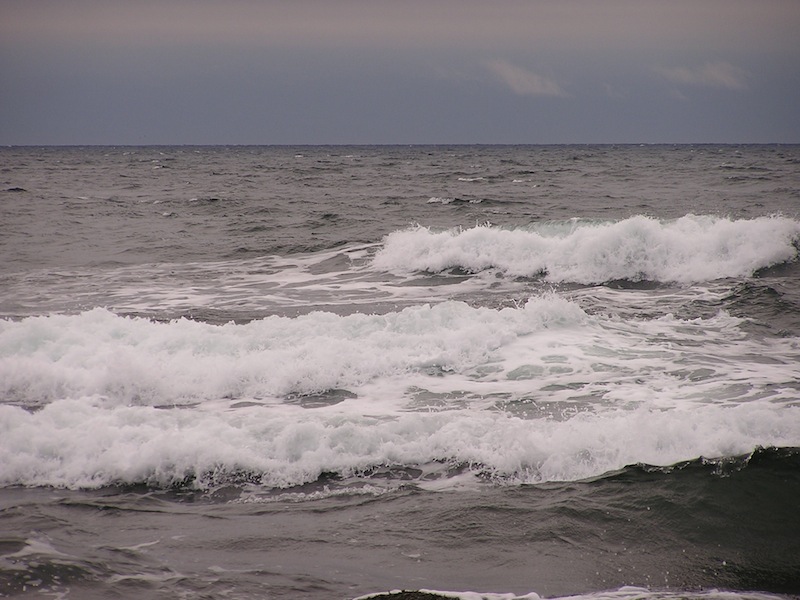
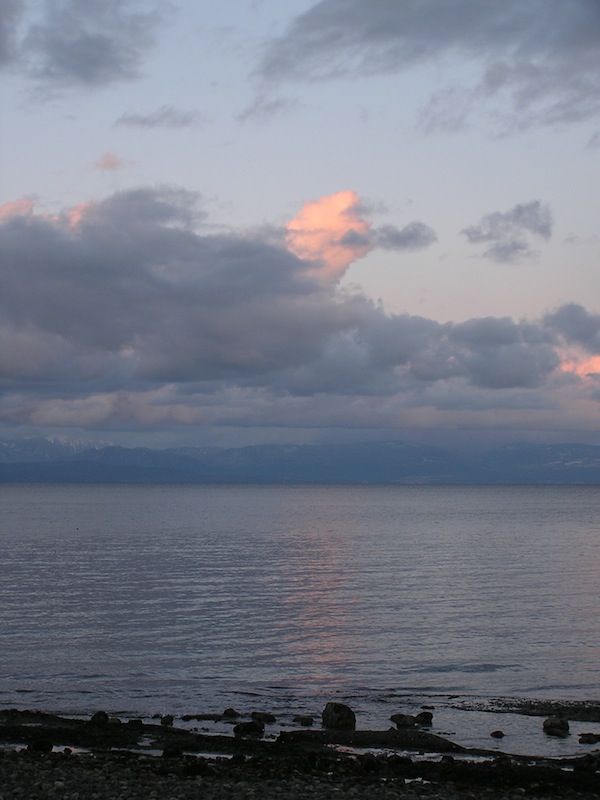
PIX: Beautiful Saturday afternoon on the island. But on the mainland winter has arrived

It’s a wonder any of us still have a liver left.
Doing the trees did make me start to wonder about something though: what qualifies as “Organic Farming”. I mean OK I don’t use 2,4,5 Ortho-Benzo-Cyclo-Deathamine (Sold by Ortho under the trade names of Bielzathane, Bielzachlor, and SaTAN’) or anything like that. I figure a chemical DOW wouldn’t make in Bhopal India is probably not a good thing to be spraying on my food. So some would say I’m an Organic Gardener. However, I am spraying a mixture of water, mineral oil, and sulphur, all man made chemicals. You’ll never find an oil derrick pumping pure clear mineral oil. It has to be processed and refined. It’s an artificial material. The sulphur is a manmade compound. It does not occur naturally, well outside of rotten eggs that is. Even the water is suspect. I use Lantzville City Water which contains chlorine. That’s not natural either. On the other hand I attended a lecture last fall where they said that natural compost containing manure is more dangerous in some ways than some chemical fertilizers. Just where is the line that separates the sainted organic gardener from the evil toxic threat to planetary security?
I really don’t know so you’re all welcome to chime in with your two cents here.
In doing the apple spraying I did realize that I had forgotten to turn off the outside faucets for the winter. Of course here it’s not as big a deal as in Minnesota. Back there, as I understand it, if you forget to turn off your outside faucets in the winter they will freeze, your house will explode, AND the city will charge you for the million gallons of wasted water. Here it’s not nearly as critical but I still wanted to shut them off. The trick was finding the cut off valves. (Of course this winter those of you in Minnesota have not had to worry much about this.)
The front valve was comparatively easy. I knew where it went through the wall, so I went inside and the shut off valve was more or less where I expected. It was under the stairs, inside the family room wall, mounted to the outside wall. I just had to reach up through the insulation and brown recluse spiders as far as I could and with the tips of my fingers feel around for the shutoff valve. It was facing away from me and turned backwards requiring either 8 or possibly 37 turns to close.
But this was the easy one.
The garden faucet was harder because it ran underground to the house. I didn’t know where it came in. I finally talked to me neighbour the landscaper. He’d done some of the work on the back yard and I figured that maybe he remembered. He didn’t but did have the previous owners new phone number and offered to give them a call. A while later he knocked on the front door. He was laughing. The instructions were more like a treasure map and he’d had to write them down. They went something like this:
Start at the front door
Go down the stairs
Enter the laundry room
While still in the doorway facing the window find the first cabinet on the left
Remove everything from this cabinet.
Remove the shelf
Remove three screws on the left side wall.
This releases a hidden panel on that side of the cabinet.
Remove the panel.
Behind the panel is sheetrock but if you look way in the back you’ll notice the sheetrock stops about four inches from the back of the cabinet.
Pull the insulation out of this hole
With a flashlight climb into the cabinet far enough so you can see into the wall
There will be several plastic pipes that are part of the house plumbing
You can’t see it but reach up and if you feel around you will find one pipe has a shutoff valve
Close that valve.
But wait there’s more
After I closed the valve I had to put everything in the laundry room back together. Then I went outside. Underneath the bottom of the stairs that lead up to the deck there is a small raised bed planter with some ferns in it. In the corner of this planter is what looks like a pipe end set up to be a drip irrigator. It’s not. It really is the air bleeder line for the outside water lines. I had to remove the cap from this pipe, then I went down to the lower garden and opened both faucets. The water in the outside lines drained out due to gravity. Once they were done I left the faucets open but I made sure to replace the cap on the bleeder line so nothing could crawl in there and clog the system.
There had to be an easier way to do this.
Doug & Marsha
PIX: Beautiful Saturday afternoon on the island. But on the mainland winter has arrived